
Image Copyright Law in Pakistan: Legal Rules, Penalties & Common Mistakes
Image copyright issues are becoming very common in Pakistan. Many Pakistani businesses, bloggers, and content creators use pictures from the internet without permission. Most people do not realize that this can lead to legal notices, penalties, and even court cases.
This guide explains image copyright law in Pakistan, the real penalties, and the most common mistakes people make. If you run a business website, e-commerce store, or social media page in Pakistan, this article will help you stay safe.
Image Copyright Infringement in Pakistan: Why Businesses Face Legal Risk
Image copyright problems are increasing in Pakistan because businesses are using online images daily. Many people do not realize they are breaking the law until they receive a legal notice. Understanding the legal rules early can protect your business from avoidable penalties.
In Pakistan, copyright law protects photographs automatically. This means a photo becomes protected the moment it is created. The photographer or creator owns the image, even if it is uploaded online.
The main law that covers copyright registration in Pakistan is:
✅ Copyright Ordinance 1962 (Pakistan)
This law applies to:
- Photos and photography work
- Website images
- Product pictures
- Posters and graphics
- Social media images
In most cases, copyright lasts for the photographer’s lifetime plus 50 years after death.
If you want to understand copyright registration, legal notices, or enforcement in Pakistan, it is recommended to consult a qualified intellectual property lawyer.
What Does Image Copyright Law in Pakistan Say About Photographs?
Many Pakistani users believe that “pictures on Google are free to use.” This is one of the biggest mistakes.
A photograph is treated as a protected creative work in Pakistan. This protection applies even if the image is freely visible online. That is why it is important to understand what “copyright ownership” actually means before using any picture.
✅ Google Images does NOT give you permission
Google Images is like a search directory. It helps you find images. But it does not sell licenses, and it does not give ownership rights.
Every image you see online belongs to someone unless it is clearly labeled as free to use.
Even if an image has:
- no watermark
- no logo
- no copyright symbol
…it can still be protected under Pakistani copyright law.
Is Using Google Images Legal in Pakistan?
In simple words: No, not without permission.
Google makes it easy to find images, but that does not mean those images are free for commercial use. Most photos visible in search results still belong to the original photographer or company. Using them without permission can cause serious legal and financial trouble.
Downloading an image from Google and using it on your:
- Business website
- Restaurant page
- Facebook ads
- E-commerce listings
- Blog articles
can become a legal issue. Many businesses face copyright claims because of this.
The Real Cost of Using Unlicensed Images in Pakistan
Copyright infringement can become expensive in Pakistan, especially for commercial websites and businesses.
Many Pakistani business owners only think about copyright after receiving a claim. But the cost of infringement can be much higher than people expect. It can include fines, compensation, and even criminal proceedings in some situations.
Penalties for copyright violation may include:
- Fines up to PKR 100,000 per image
- Imprisonment for up to 3 years
- Legal fees and lawyer charges
- Compensation (damages) to the copyright owner
- Removal of infringing content
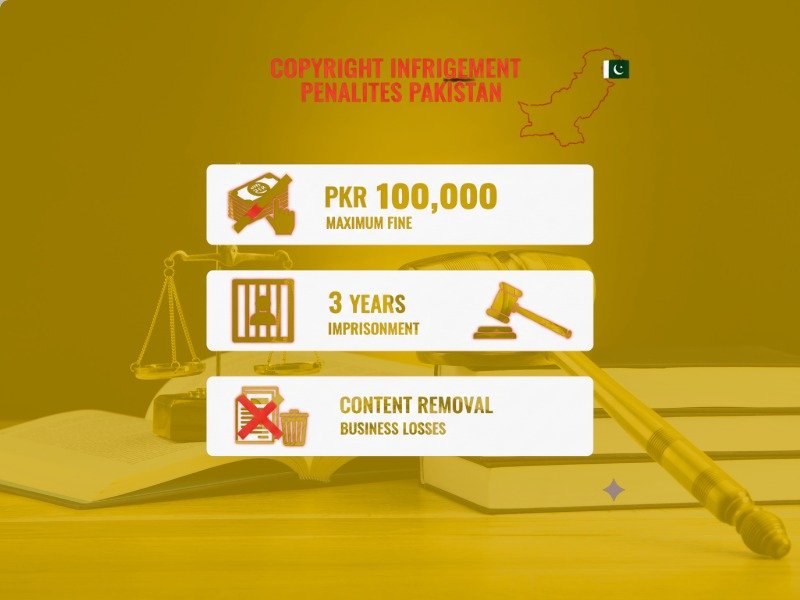
📌 Important Note: Courts consider many factors. Penalties may vary based on the case, evidence, and intent.
10 Common Image Copyright Mistakes in Pakistan (And How to Avoid Them)
Most copyright issues happen because of small mistakes, not because people want to break the law. Small businesses and freelancers often use images quickly to save time. But a simple habit change can prevent major legal problems later.
Below are the most common mistakes Pakistani content creators, agencies, and SMEs make. Avoiding these mistakes can protect your business.
Mistake #1: Using Images Without Permission or Proper Licensing
This is one of the most common mistakes on Pakistani websites and social media pages. Many people think attribution is enough, but the law requires proper rights. Always make sure you have clear permission before using someone else’s photo.
✅ Attribution does not equal permission.
You still need a proper license or written permission from the copyright owner.
Example of a wrong practice:
“Image Credit: John Photographer”
This does not automatically protect you from legal claims.
How to Get Permission the Right Way
To use an image legally, you should:
- Contact the photographer
- Buy a license from a legal platform
- Keep written proof (email or invoice)
Your permission should clearly mention:
- Where you will use the image (web, print, ads)
- How long can you use it?
- Whether editing is allowed.
- If attribution is required.
- Payment terms (if any).
Mistake #2: “No Copyright Intended” Does Not Protect You
Disclaimers are common on social media in Pakistan. People add them to avoid trouble, but courts usually do not treat them as a defense. If the content is copyrighted and you do not have permission, the legal risk remains. In Pakistan, writing disclaimers like:
- “No copyright intended.”
- “All rights belong to their owners.”
does not provide legal protection.
Copyright infringement happens when you use copyrighted material without authorization. Your intention usually does not remove liability.
Mistake #3: Small Businesses Are Also Liable Under Copyright Law
Many SMEs believe copyright enforcement only targets large companies. In reality, small businesses also receive claims and legal notices. Even a single image misuse can create a financial burden for a small brand.
In Pakistan, copyright law applies equally to:
- Small businesses
- Freelancers
- Bloggers
- Marketing agencies
- Online stores
Even if your business is in Lahore, Karachi, Islamabad, Rawalpindi, Faisalabad, or Multan, the legal risk remains the same.
Photographers and copyright owners can also find misuse through reverse image search tools.
Real-Life Examples (Common Situations)
Cases often happen when:
- Restaurants use food photos from Google
- Agencies use stock images outside the license
- Brands repost influencer pictures without permission
Mistake #4: Editing or Modifying Images Does Not Give You Ownership
Some people believe editing makes an image “new” and safe to use. But Pakistani copyright law still protects the original work. If you modify an image without permission, the risk usually stays the same. Like:
Many graphic designers believe:
“If I crop it or edit it, it becomes mine.”
That is incorrect.
Even if you:
- crop a photo
- add text
- apply filters
- change colors
- make a collage
…the original image is still copyrighted.
What Are Derivative Works?
A derivative work is based on an existing copyrighted image. Examples include:
- Resized versions
- Filtered images
- Edited pictures with logos
- Posters made from someone else’s photo
In most cases, you still need permission from the original creator.
Mistake #5: Using Social Media Images Without Permission
Social media content feels public, so many people assume it is free to reuse. But a public post is still protected under copyright law. Businesses should be especially careful when using social media content for marketing. Posting on Instagram or Facebook does not remove copyright.
Pakistani businesses often screenshot:
- Instagram posts
- Facebook pages
- TikTok content
…and use them in marketing. This is risky.
Embedding vs Downloading (Simple Difference)
✅ Embedding using official tools is usually safer because it keeps the source attached.
❌ Downloading and re-uploading removes context and may violate rights.
Legal Image Sources for Pakistani Content Creators
The safest approach is to use images that are clearly licensed for business use. This protects you from future claims and builds trust in your brand. Always read license terms carefully before using stock images. The safest option is to use licensed images or create your own content.
Free Stock Images (With Terms)
Some platforms provide free images, but you must still check their license rules.
Examples include:
- Unsplash
- Pexels
- Pixabay
- Wikimedia Commons
📌 Client Requirement Note:
Do not add 5–10 external links here. You can mention platforms, but link only 1–2 total in the whole article.
Paid Stock Photography Services
Paid images come with clearer documentation and legal proof.
Common sources include:
- Shutterstock
- Getty Images
- Adobe Stock
- iStock
- 123RF
📌 Tip: Always download the invoice/receipt and save the license terms.
Mistake #6: Misunderstanding Fair Dealing in Pakistan
Fair dealing is often misunderstood in Pakistan. People assume it works like American “fair use,” but it does not. Most business websites and monetized blogs do not qualify for this legal exception. Pakistan has fair dealing, not broad “fair use” like the USA.
Fair dealing may apply in limited cases, such as:
- Research and private study
- Criticism or review
- News reporting
- Court/judicial proceedings
Most commercial blogs and business websites do not qualify.
If your blog runs ads, affiliate links, or promotes services, it is usually treated as commercial use.
Mistake #7: Employee-Created Images May Not Automatically Belong to Your Business
This is an important legal issue for companies in Pakistan. Businesses often hire photographers or designers and assume the content belongs to them forever. But ownership depends on written agreements and the legal relationship. A clear contract can prevent disputes in the future.
If an employee or hired photographer creates images for you, ownership depends on the contract.
What You Should Include in Agreements
Make sure your written agreement mentions:
- Copyright ownership transfer to the employer
- Scope of work
- Payment terms
- Future usage rights
- Whether the employee can reuse the content
Verbal agreements are not enough.
How to Protect Your Own Images Under Copyright Law in Pakistan
If you are a photographer, designer, or business owner in Pakistan, your images can also get stolen online. Protecting your work helps you maintain value and ownership. With basic steps, you can reduce the chances of unauthorized use.
IPO Pakistan Copyright Registration for Photos
Copyright protection is automatic, but registration can give stronger proof in disputes.
✅ IPO Pakistan offers copyright registration for creative works through its online system.
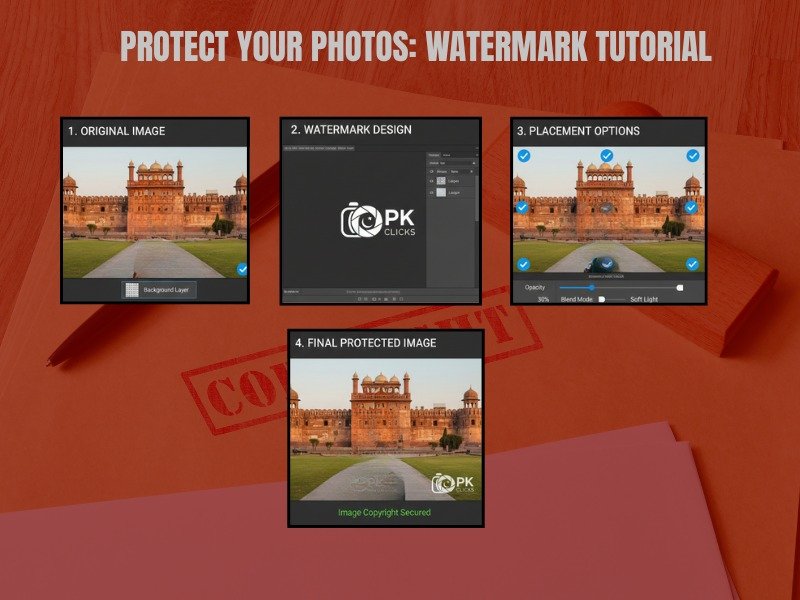
Technical Ways to Reduce Image Theft
You can also:
- Add Watermarks
- Use Metadata (Exif)
- Reduce Image Size For Web Use
- Disable Right-Click (Basic Protection)
DMCA Takedowns for Pakistani Websites Using Copyrighted Images
Many Pakistani websites use international hosting platforms. In those cases, takedown systems like DMCA, the Digital Millennium Copyright Act, can help remove stolen content. It is still important to document everything properly before filing a complaint.
If your image is stolen, you should:
- Take screenshots of the misuse
- Save URLs as proof
- Collect your original image evidence
Platforms like Google and social media networks often respond quickly to proper copyright complaints.
Mistake #8: Violating Stock Image License Terms After Purchase
Buying a stock image does not always mean unlimited rights. It is a good step, but it is not always enough. Different licenses have different limitations and rules. If you use an image outside the license terms, you may still face claims.
Many stock licenses restrict:
- Print quantity
- Website impressions
- Ad usage
- Resale use
- Use inside templates
Always read license terms properly. Save proof of purchase.
Image Copyright Law for Pakistani E-Commerce Businesses
E-commerce stores face unique problems because they upload many images. Product listings, banners, and ads all require safe image sourcing. One wrong image can cause removal requests and legal trouble.
Using Manufacturer Product Images
Sometimes a brand allows retailers to use product photos. But you should still request written permission.
Ask for written confirmation that covers:
- Specific products
- Platforms allowed (website, Daraz, social ads)
- Duration of permission
- Editing rules
Mistake #9: Public Domain Images and Copyright Myths
Not every old image is public domain. Public domain rules are not based on guessing or assumptions. Just because an image is old does not mean it is free to use. Always verify the source and status before using a so-called “free” image.
In Pakistan, copyright generally ends 50 years after the creator’s death. Only then does the work enter the public domain.
Government works may be public domain in some cases, but not always. Always check the terms before using such images.
International Copyright Treaties Protecting Pakistani Images
Copyright is not limited to one country. Pakistan is part of international frameworks like The WIPO Copyright that protect creative work across borders. This matters for businesses that copy images from foreign sites or creators. Pakistan is part of international copyright systems like the Berne Convention. This means Pakistani photographers’ work can be protected in other countries too.
It also means foreign creators’ work can be protected in Pakistan.
Mistake #10: Failing to Keep License Documentation
This is a silent mistake that becomes a big problem later. Even if you buy or license an image correctly, you still need proof. Without documentation, it becomes hard to defend yourself during a dispute. Keeping records is a simple habit that can save you later.
If someone sends you a legal notice, you must prove you had permission.
What to Save for Safety
Keep records like:
- Invoices from stock sites
- Photographer permission emails
- License PDFs
- Screenshots of Creative Commons terms
Keep these files for at least several years after use.
What to Do If You Receive a Copyright Infringement Notice in Pakistan
If you get a copyright notice, do not ignore it. A legal notice can be stressful, but quick action helps you stay safe. Many disputes can be handled professionally without going to court. The most important thing is not to ignore the issue.
Immediate Steps
- Remove the image from your website and all platforms
- Take screenshots showing removal (for proof)
- Collect your license evidence (if any)
- Consult an IP lawyer before replying
Many cases settle outside court. A professional and respectful response helps.
Best Practices for Image Copyright Compliance in Pakistan
Good image compliance is not difficult. It only requires a simple process and a little discipline. Once your team follows a system, copyright issues become rare. Here are simple steps that help you stay safe long-term:
Create an Image Usage Policy
Make a policy that explains:
- Allowed image sources
- License verification steps
- Who approves content before publishing
- Documentation storage method
Build Your Own Image Library
The best long-term solution is original content.
Hire Pakistani photographers for:
- Product photos
- Office pictures
- Team photos
- Service-related visuals
This reduces legal risk and also improves your brand image.
Regular Compliance Audits (Simple but Effective)
Copyright problems often happen over time, especially on older web pages. A regular audit helps you identify risky images before someone complains. It is a safe habit for growing businesses. Every 3 months, review images used in:
- Website pages
- Blogs
- Facebook and Instagram posts
- Ads and banners
- Email marketing
- Portfolios
Replace any image that does not have proper licensing proof.
Why Choose Qadir Chamber for Image Copyright Legal Support?
Image copyright cases can become serious in Pakistan. They can damage your business reputation and cost you money. Such cases can become serious if handled carelessly. Getting proper guidance early can prevent long disputes and unnecessary costs. Qadir Chamber supports businesses with clear legal advice and practical steps.
Qadir Chamber helps businesses and individuals with:
- Copyright Legal Advice
- Copyright Registration Support
- Legal Notices And Replies
- Intellectual Property Dispute Guidance
- Business Compliance Support
Contact us, as we focus on clear communication and practical solutions.
Conclusion: Safe and Ethical Image Usage in Pakistan
Using images legally is important. It protects creators and protects businesses. Safe image use is not just a legal requirement. It also protects your brand reputation and supports ethical content practices in Pakistan. If you run a business online, image compliance should be part of your strategy.
If you want to stay safe:
- Avoid Google Images misuse
- Use licensed stock images
- Keep proof of permission
- Create original content where possible
Start by checking your website today. Remove any unlicensed images. Build a simple image policy for your team.
Copyright compliance is not only legal protection. It also shows ethical business practices.
Disclaimer: This article provides general information about copyright laws in Pakistan and should not be considered legal advice. Consult qualified intellectual property attorneys for specific legal guidance.
How long does copyright last in Pakistan?
Copyright protection usually lasts for the photographer’s lifetime plus 50 years under the Copyright Ordinance 1962. After that, the work may enter the public domain.
Do I need to register copyright to protect my images?
No. Copyright protection is automatic upon creation. However, registration with IPO Pakistan may provide stronger proof of ownership in legal disputes.
Can I use images from Pinterest for my blog?
No. Pinterest images are usually copyrighted. Pinterest does not give you legal rights to download and reuse images on your website.
Are AI-generated images copyright-free?
AI image copyright can be legally complex. Some platforms provide usage rights. Others may restrict commercial use. Always check the platform’s terms.
If I credit the photographer, can I use their image?
No. Attribution alone is not permission. You need written permission or a legal license from the copyright owner.
Can I modify an image slightly to avoid copyright infringement?
No. Cropping, filters, or adding text does not remove copyright protection. Modified images are often treated as derivative works.
What should I do if I receive a copyright infringement notice?
Remove the image immediately. Save proof of removal. Gather any licensing evidence. Consult an IP lawyer before responding.
Can I use screenshots from social media in my marketing?
Usually, no, unless you have permission. Screenshots contain copyrighted material. Using official embedding tools is usually safer than re-uploading.
What’s the difference between royalty-free and copyright-free?
Royalty-free means you can use an image under license without paying every time. It is still copyrighted. Copyright-free usually refers to public domain works with no restrictions.
How can I verify if an image is in the public domain?
Check the creator’s death date and licensing source. In Pakistan, copyright generally ends 50 years after the creator’s death. When in doubt, assume it is protected.
Can my employees claim copyright on images they create at work?
Yes, unless there is a written agreement transferring copyright to the company. Always use employment contracts with copyright assignment clauses.
Are memes protected by copyright?
Yes. Most memes use copyrighted images. Commercial use of memes has a higher legal risk.
Can I use images from government websites?
Sometimes, but not always. Some government content may be public domain, while other content may be licensed. Always verify the terms of use first.
Is using images in educational presentations legal?
Non-profit educational institutions may qualify for limited fair dealing exceptions. Commercial coaching centers and paid courses usually do not qualify.