International Copyright Law for Pakistani Creators: Global Protection Explained
Imagine this: You write a beautiful song in your Lahore studio. A friend uploads it to YouTube. Within days, people in America, England, and Australia are listening to it. But then you discover someone in another country is selling your song without asking you. What can you do?
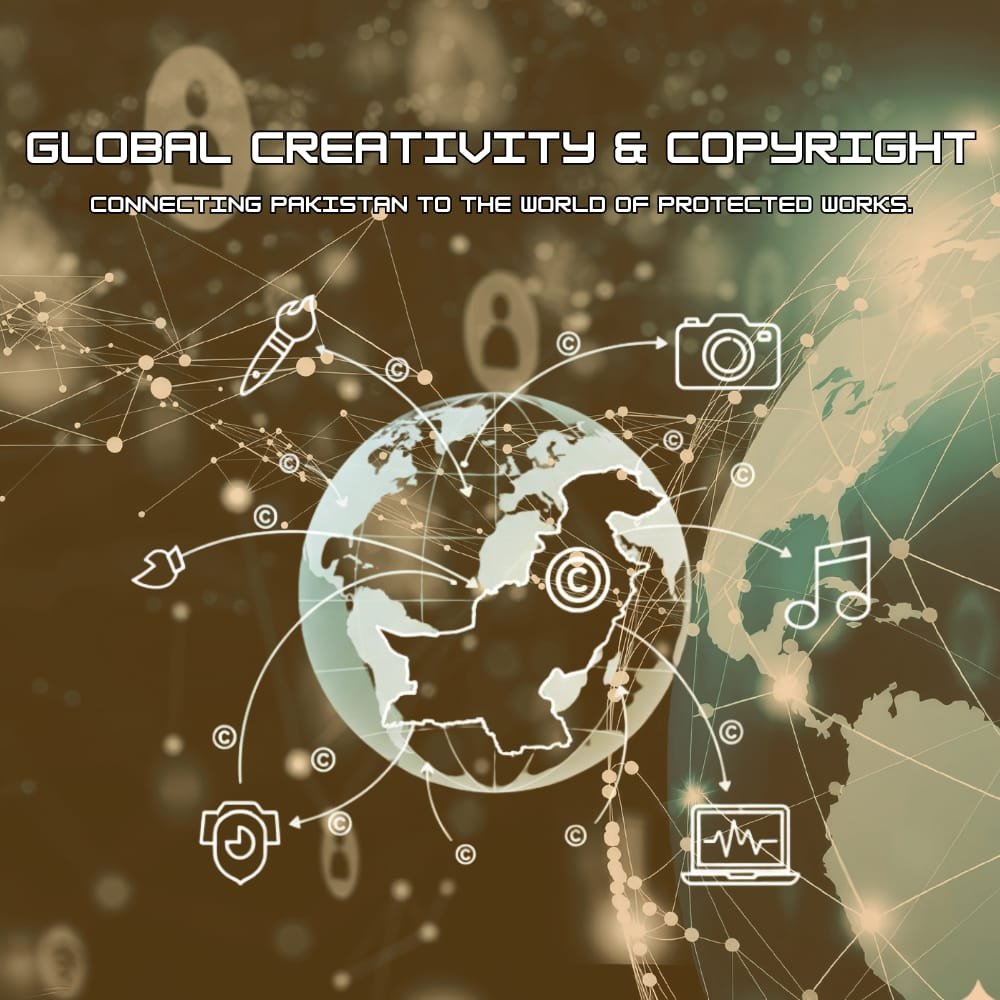
Good news! International copyright law protects your creative work across the world. Whether you write stories, create art, compose music, make videos, or design graphics, your work is protected in most countries.
This guide explains everything in simple words. You’ll learn how your work stays protected internationally and what steps you can take to keep it safe.
What Is Copyright? Understanding the Basics of International Copyright Law
Copyright is your legal right to control your creative work. Think of it as ownership.
When you create something original, you automatically own it. Nobody else can copy it, sell it, or change it without your permission. This applies to:
• Books, articles, and blog posts
• Songs and music compositions
• Paintings, drawings, and photographs
• Videos and films
• Computer software and apps
• Website designs and graphics
Important: You cannot copyright ideas. Only the way you express an idea gets protection. For example, you can’t copyright the idea of “a love story.” But you can copyright your specific love story with your unique characters and plot.
How International Copyright Law Works Across Countries
There’s no single world copyright. Instead, countries make agreements with each other. These agreements say: “We’ll protect your creators if you protect ours.”
Pakistan joined several of these agreements. This means your work gets protected in over 180 countries automatically. You don’t need to do anything special. The protection starts the moment you create something.
International Copyright Law Agreements That Protect Pakistani Creators
Let’s talk about the main agreements that protect Pakistani creators worldwide.
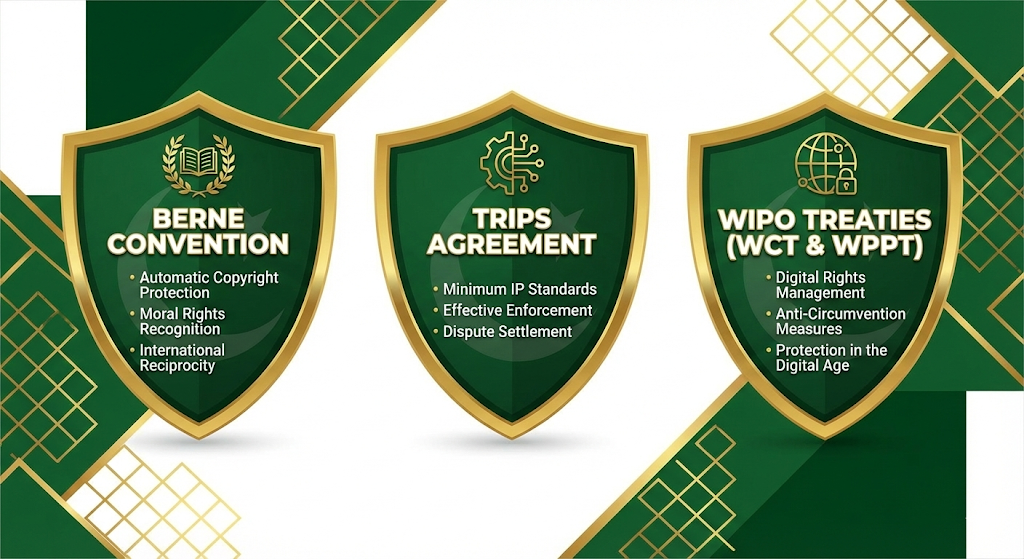
The Berne Convention (The Berne Convention and International Copyright Law Protection our Worldwide Shield)
This is the oldest and most important copyright agreement. Pakistan is a member.
What it does for you:
• Protects your work in 180+ countries automatically
• No registration needed for basic protection
• Lasts your lifetime plus 50 years (so your children benefit too)
• Protects your name and reputation as the creator
Example: You paint a picture in Karachi. Because of Berne Convention, that painting is automatically protected in USA, UK, China, Germany, and 175 other countries. Nobody there can copy or sell it without your permission.
TRIPS Agreement: International Copyright Law for Software and Digital Content
TRIPS is part of the World Trade Organization (WTO). Pakistan is a WTO member, so this TRIPS agreement applies to us.
Why it matters:
• Protects computer programs and software you create
• Covers databases and digital collections
• Requires all member countries to have strong copyright laws
• Provides ways to solve international disputes
Example: You develop a mobile app in Islamabad. TRIPS ensures your app code is protected in all 160+ WTO member countries.
WIPO Copyright Treaty and Online Protection Under International Copyright Law
WIPO (World Intellectual Property Organization) created this treaty for digital creators facing internet challenges.
It helps with:
• Online distribution and sharing
• Digital downloads and streaming
• Protection against piracy websites
• Control over who can share your work online
Example: Someone downloads your photography from your website and starts selling prints online. The WIPO Copyright Treaty gives you tools to stop them.
How International Copyright Law Applies in Pakistan
Pakistan has its own copyright law that operates in conjunction with international agreements.
Pakistan’s Copyright Ordinance 1962 and International Copyright Law
The Copyright Ordinance 1962 is our main law. It’s simple:
• You own copyright automatically when you create something
• Protection lasts your lifetime plus 50 years
• You decide who can copy, sell, or change your work
• You can take legal action against people who steal your work
You don’t need permission from anyone to get copyright. The moment you finish creating something, it’s yours.
Should Pakistani Creators Register Their Work Under International Copyright Law?
Registration is optional, not required. But it’s smart to register important work.
IPO-Pakistan (Intellectual Property Organization) handles registration. You can do it online.
Benefits of registration:
• Official proof that you created the work
• Easier to win court cases if someone steals your work
• Stops others from claiming they created it first
• Shows you’re serious about protecting your work
Cost is low (usually a few thousand rupees). The process is simple.
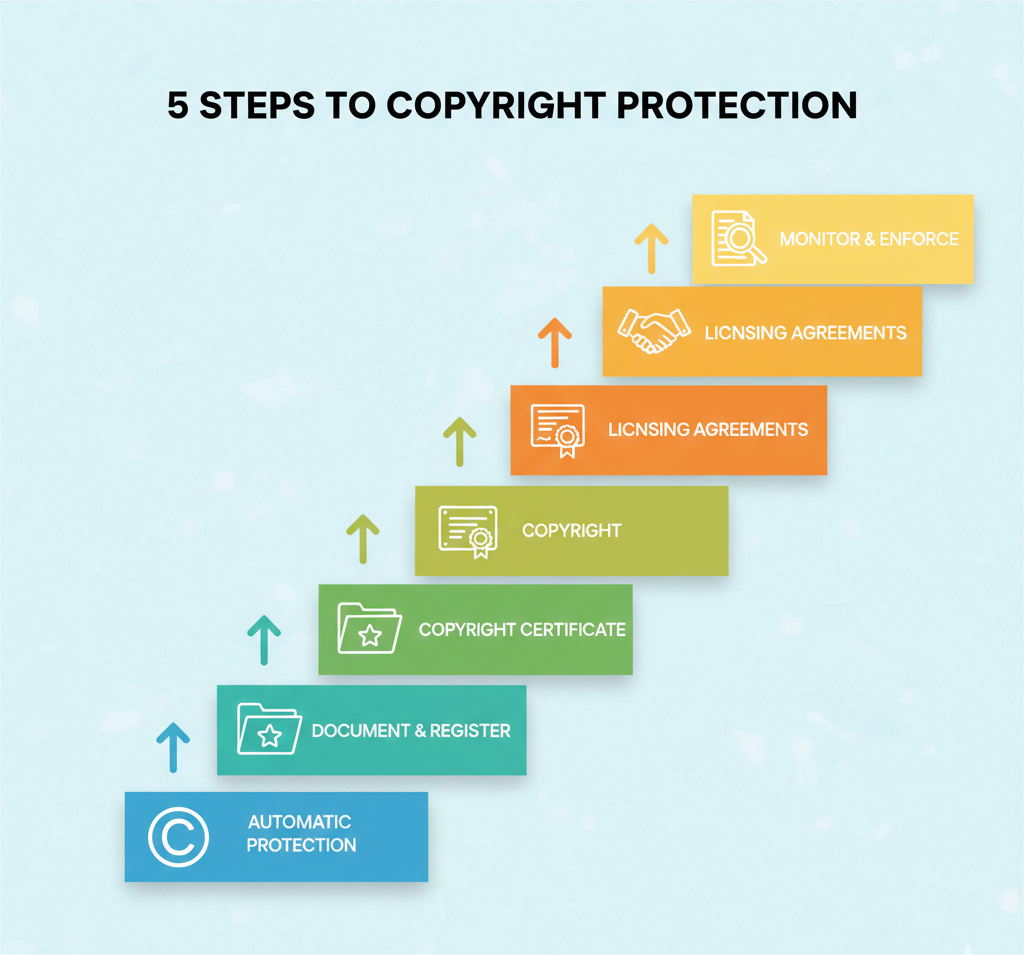
How to Protect Your Work Under International Copyright Law (Step-by-Step)
Follow these easy steps to keep your creative work safe:
Step 1: Add Copyright Notices for International Protection
Always put a copyright notice on your work. It’s like putting your name on your belongings.
Write this:
© 2025 [Your Name]. All Rights Reserved.
Examples:
• On your blog: Add it at the bottom of every post
• On your photos: Use watermarks with © and your name
• On your videos: Add it in the description and end credits
• On your book: Put it on the copyright page (usually page 2)
Step 2: Keep Creation Records for International Copyright Claims
Save proof that you created the work. This helps if someone claims they made it first.
What to save:
• First drafts and sketches
• Files with dates (computer saves dates automatically)
• Emails about your work
• Work-in-progress photos or screenshots
Simple trick: Email your work to yourself. The email timestamp proves you had it on that date.
Step 3: Register Important Works in Pakistan for Global Enforcement
Register your most valuable work with IPO-Pakistan. Think of work you plan to sell or that took months to create.
Register these first:
• Books you want to publish
• Music albums or singles for sale
• Software or apps you’re launching
• Artwork you’re selling prints of
• Any work that represents your business
Step 4: Use Written Agreements to Secure International Copyright Rights
When working with clients or partners, always get agreements in writing.
Your agreement should say:
• Who owns the copyright (usually you)
• What the client can do with your work
• What they cannot do (like resell it)
• How much you’ll get paid
• Whether your name stays on the work
A simple written agreement (even WhatsApp messages) is better than nothing. But proper contracts are safer.
Step 5: Monitor Global Use of Your Work Online
Regularly check if anyone is using your work without permission.
Easy ways to check:
• Google your work’s title
• Use Google Image Search for photos (drag and drop your image)
• Set up Google Alerts for unique phrases from your writing
• Check YouTube and social media for your videos or music
Common International Copyright Law Problems Faced by Pakistani Creators
Let’s talk about real problems you might face and how to deal with them.
Problem 1: Someone Is Selling Your Work Online
This happens all the time. You create something, and someone else starts making money from it.
Real examples:
• Your photos appear on T-shirts someone else is selling
• Your writing appears on another website with their name on it
• Someone downloads your music and sells it on iTunes
• Your video tutorials are re-uploaded by others
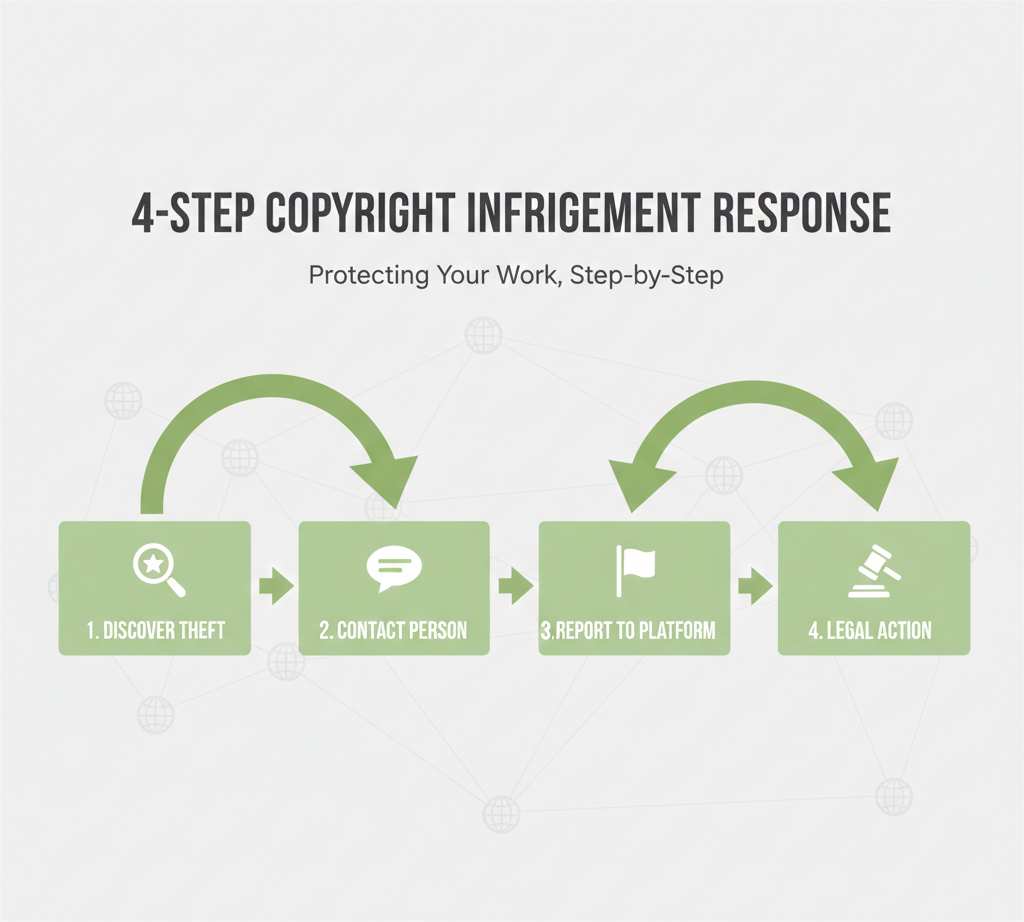
What to do:
1. Take screenshots as proof
2. Contact the person directly and ask them to remove it
3. Report it to the platform (explained below)
4. If they don’t stop, contact a lawyer (Qadir Chamber can help)
Problem 2: No Credit Given to You
Someone shares your work but doesn’t mention your name. Or worse, they claim they created it.
This hurts because:
• You lose recognition for your work
• People think someone else is the creator
• You miss opportunities because people don’t know it’s yours
Your right to be credited is protected by law. This is called “moral rights.” You can demand they add your name and fix the credit.
Problem 3: Work Gets Changed or Modified
Someone takes your work and changes it. Maybe they add things, remove parts, or mix it with other content.
Examples:
• They crop your photo and remove your watermark
• They change words in your article
• They add their logo to your design
• They speed up or slow down your video
You have the right to stop unauthorized changes to your work. Only you decide if changes are allowed.
Problem 4: Client Confusion About Ownership
You create something for a client. Later, they think they own everything and can do whatever they want with it.
Common misunderstandings:
• Client thinks paying you means they own the copyright
• Client wants to resell your work to others
• Client removes your name from the work
• Client makes major changes without asking you
Solution: Always clarify ownership in writing before starting work. State clearly what they can and cannot do with your creation.
What to Do When Someone Steals Your Work
Follow these steps in order. Start simple, then escalate if needed.
Action 1: Collect Evidence
Before doing anything else, gather proof:
• Take screenshots showing their use of your work
• Save the full website URL
• Note the date you discovered it
• Find proof you created it first (your dated files)
• Save any registration certificates you have
Action 2: Send a Friendly Message
Sometimes people don’t know they’re doing wrong. Start with a polite message:
Sample message:
“Hello, I noticed you’re using my [photo/article/music] without permission. I created this work, and I own the copyright. Please remove it within 7 days, or we’ll need to take further action. Thank you.”
Many people will remove it immediately when they realize it’s someone’s property.
Action 3: Report to the Platform
If the person doesn’t respond or refuses to remove it, report them to the platform hosting the content.
Where to report:
• YouTube: Use their Copyright Takedown form
• Facebook/Instagram: Report through their IP Help Center
• Twitter/X: Fill their Copyright Report form
• TikTok: Submit a Copyright Infringement Report
• Websites: Search for their DMCA contact info
Platforms usually respond within 2-7 days. They’ll remove the content if your claim is valid.
This process is free and works internationally. Pakistani creators can report content in any country through these platforms.
Action 4: Legal Action
If the problem continues or involves serious money, you may need legal help.
When to contact a lawyer:
• The person is making significant money from your work
• They refuse to stop after multiple requests
• The infringement is damaging your reputation or business
• You need to enforce your rights in another country
Qadir Chamber specializes in intellectual property cases for Pakistani creators. We help with:
• Sending legal notices
• Filing copyright infringement cases
• International enforcement
• Negotiating settlements
Social Media and International Copyright Law: What Pakistani Creators Must Know
Social media has special rules. Let’s make them simple.
What Happens When You Post on Social Media?
When you upload something to Facebook, Instagram, YouTube, or TikTok, you still own it. The platform doesn’t steal your copyright.
But you give them permission to:
• Show your content to users
• Let people share it
• Use it in ads (sometimes)
• Keep copies on their servers
Important: You can still sell your work elsewhere or license it to others. The platform’s permission doesn’t stop you from using your own content.
How to Protect Your Work on Social Media
Smart strategies:
• Watermark images and videos: Add your name or logo (but keep it small so it doesn’t ruin the work)
• Lower quality for previews: Post smaller or lower resolution versions. Keep high-quality versions for paying clients.
• Add copyright in captions: Write © [Your Name] in your post description
• Check privacy settings: Decide if you want to allow downloads and shares
• Monitor regularly: Search for your work weekly to catch unauthorized uses
YouTube Content ID and International Copyright Law Enforcement
If you’re a YouTube creator, you can use Content ID. This system automatically finds videos using your content.
How it works:
1. You register your original video or music with YouTube
2. YouTube scans all uploaded videos
3. When it finds a match, you get notified
4. You choose: block it, track it, or earn money from it
To qualify, you need to join the YouTube Partner Program. This requires 1,000 subscribers and 4,000 watch hours.
Artificial Intelligence, NFTs, and International Copyright Law
Technology is changing fast. Here’s what you should know.
Artificial Intelligence (AI) and Your Work
AI tools like ChatGPT, Midjourney, and others are everywhere. But copyright law for AI is still unclear.
Current situation:
• If AI creates something, it might not have copyright protection: Courts are still deciding if AI-generated work can be copyrighted
• If you use AI to help you: You might own copyright if you add enough of your own creativity
• If AI learns from your work: This is controversial. Some say it’s copying, others say it’s fair use
Best practice: If you use AI tools, be honest about it. Document what you created yourself versus what the AI generated. Your creative input matters most.
NFTs (Digital Ownership Tokens)
NFTs are digital certificates proving someone owns something. But owning an NFT doesn’t mean owning copyright.
Example: You sell an NFT of your digital painting. The buyer owns the NFT (the certificate). But you still own the copyright (unless you specifically transfer it in writing).
This means:
• The buyer can’t make copies to sell
• They can’t put it on T-shirts or merchandise
• They just own that specific digital token
• You can still sell prints, licenses, or use the work elsewhere
Always write clear terms explaining what rights come with the NFT.
Conclusion: How International Copyright Law Secures Pakistani Creators Globally
Remember these key points:
• Your work is automatically protected when you create it
• Protection works in 180+ countries thanks to international agreements
• Add © and your name to everything you create
• Keep records of your creation process
• Register valuable work with IPO-Pakistan
• Use written agreements for client work
• Report theft to platforms first – it’s free and effective
• Get legal help for serious cases
Creating is hard work. Your creativity deserves protection. International copyright law gives you that protection automatically. You just need to understand your rights and take simple steps to enforce them.
Don’t let fear of theft stop you from sharing your work. Share confidently, knowing you have legal protection backing you up.
Why Qadir Chamber Is Trusted for International Copyright Law Matters
If someone has stolen your work, or if you need help understanding your copyright rights, contact Qadir Chamber. We speak your language and understand the challenges faced by Pakistani creators.
We help with:
Copyright registration • Contract drafting • Infringement cases • International enforcement • Legal advice
FAQs
Do I need to register my work to get copyright?
No! You get copyright automatically when you create something. Registration is optional but helpful if you ever need to go to court.
Someone in America is using my work. Can I do anything from Pakistan?
Yes! International treaties protect your work in America. You can report them to the platform they’re using (like YouTube or Instagram). The platform will handle it from there.
What if I post my work on Facebook? Do I lose my copyright?
No, you keep your copyright. Facebook just got permission to show it on its platform. You can still sell it, license it, or use it however you want.
How can I prove I created something first?
Keep dated files, drafts, and emails. Email yourself a copy. Register with IPO-Pakistan. All these create proof with dates that you can show later.
Is my work protected in India, China, and other countries?
Yes, in most countries. Over 180 countries are part of international copyright agreements. This includes all major countries like the USA, the UK, Europe, China, India, the UAE, and more.
What is “fair use”? Can people use my work for free?
Fair use allows limited use for education, criticism, or news. But it’s complicated and varies by country. In Pakistan, it’s constrained. Most uses require your permission. Don’t worry – fair use rarely applies to commercial use of your work.